Step-by-Step Category 3 Toilet Overflow Cleanup Protocol
Step 1: Source Isolation (Minute 0 to 5)
- Shut the toilet supply valve clockwise. If the valve is seized, shut the main water supply at the meter.
- Do not flush. Repeat flushing on a blocked line increases contamination volume by 1.6 gallons per attempt.
- Open a window for ventilation. Target air exchange: 4 to 6 changes per hour.
- Photograph the source, the standing water, and every affected surface for your insurance claim file.
- Keep children, pets, and immunocompromised occupants out of the affected zone and any room sharing HVAC return air.
- Shut off HVAC at the thermostat to prevent aerosolized pathogens from migrating through ductwork.
Step 2: PPE and Containment Setup (Minute 5 to 20)
- Technicians don full Category 3 PPE: nitrile gloves (8 mil minimum), N95 respirator or half-face APR, eye protection, and disposable Tyvek suits.
- Establish containment using 6-mil polyethylene sheeting taped floor-to-ceiling at all openings to unaffected rooms.
- Deploy a negative air machine with HEPA filtration rated at 500 to 2000 CFM, exhausted to exterior.
- Tape off the contaminated zone with red barricade tape. No occupant traffic permitted.
- Seal HVAC supply and return registers inside the containment with plastic and tape.
- Stage a decontamination corridor at the containment entry with a tack mat, PPE doffing bag, and disinfectant wipes.
Step 3: Bulk Water Extraction (Minute 20 to 90)
- Truck-mounted or portable extractors pull standing water at 100 to 200 PSI vacuum.
- For volumes over 50 gallons, we deploy a 55-gallon recovery tank with EPA-compliant black water disposal.
- Weighted extraction passes on carpet (if salvage is even considered, which is rare in Category 3) at minimum 3 passes per linear foot.
- All extraction wastewater is transported to a licensed disposal facility, not dumped on site.
- Manifest documentation from the disposal facility is retained in the project file for adjuster review.
Step 4: Material Removal and Disposal
Under IICRC S500 Section 12.2.6, the following materials must be removed in a confirmed Category 3 event:
- Carpet and pad within the affected area plus 24 inches beyond visible saturation.
- Drywall cut to 12 to 24 inches above the visible water line, depending on wicking moisture readings.
- Insulation (fiberglass, cellulose, or spray foam contacted by sewage).
- Particleboard, MDF, OSB subfloor, and laminate flooring.
- Baseboards, shoe molding, and any porous trim contacted by black water.
- Upholstered furniture, mattresses, and pillow-top items with direct contact.
- Cardboard storage boxes, paper goods, and books inside the contaminated zone.
Hardwood, ceramic tile, and concrete may be salvageable with aggressive decontamination. We document every removal decision with moisture meter readings (Protimeter or Tramex), thermal imaging, and photo evidence. All demolition debris is double-bagged in 6-mil contractor bags, labeled biohazard, and removed through the shortest exterior route to a sealed dumpster. For broader context on contaminated water response, our sewage backup cleanup guide covers the full restoration arc.
Step 5: Cleaning and Decontamination (Hour 2 to 6)
- HEPA vacuum all hard surfaces within and 6 feet beyond the containment zone.
- Apply EPA-registered hospital-grade disinfectant (typically a quaternary ammonium or hydrogen peroxide compound) at label-specified dwell time, usually 5 to 10 minutes.
- Mechanical agitation with stiff-bristle brushes on grout, subfloor seams, and structural framing.
- Second disinfectant pass after agitation, allowed to air-dry.
- HEPA vacuum a second time after surfaces are dry.
- Treat exposed framing with an antimicrobial coating rated for porous wood, applied at 200 to 400 square feet per gallon.
Step 6: Structural Drying (Day 1 to Day 4)
- Calculate required dehumidifier capacity: 1 LGR unit (low-grain refrigerant) per 500 to 700 square feet of affected area.
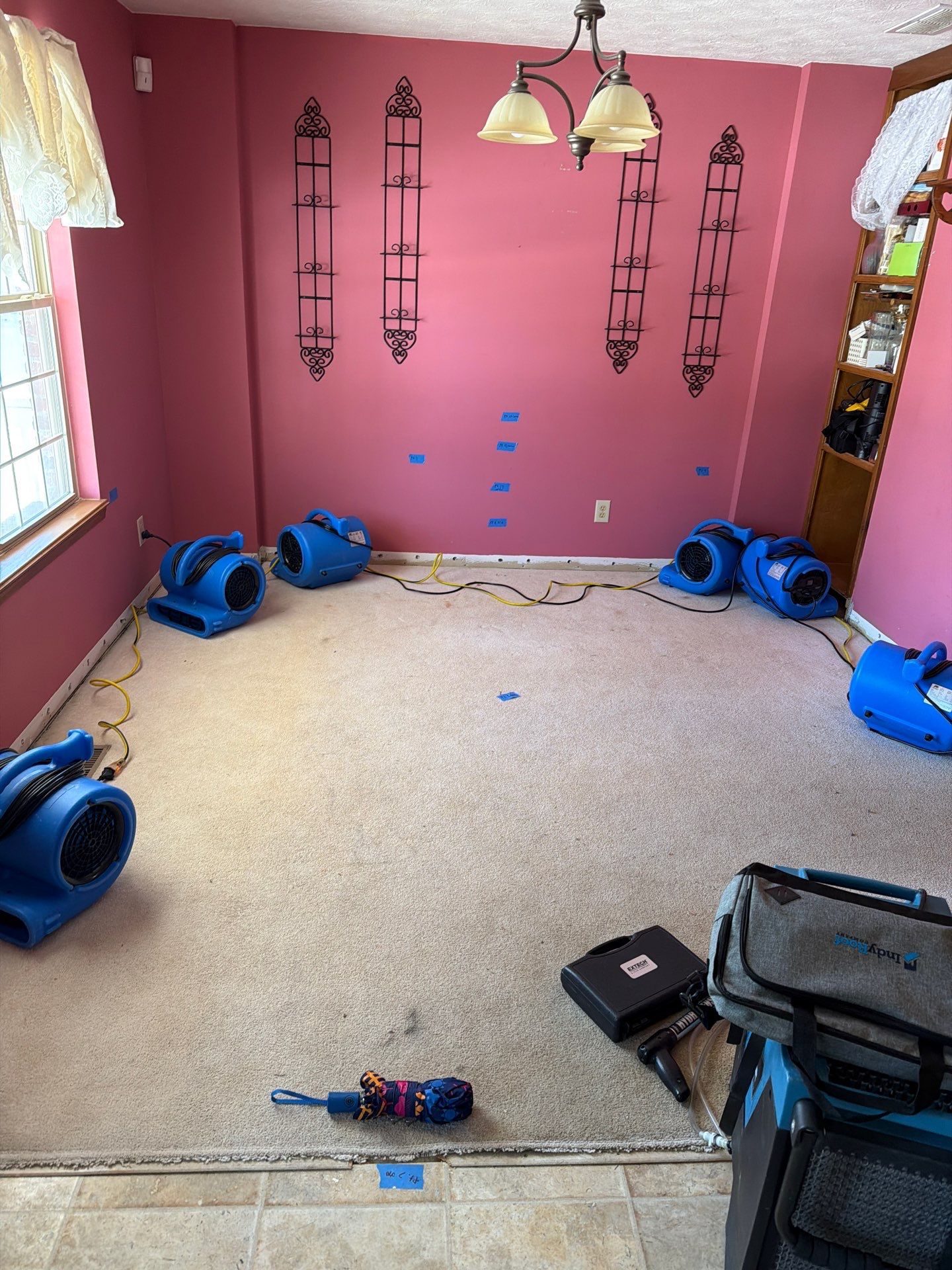
- Set air movers at 1 per 50 to 60 linear feet of wall, angled at 15 to 45 degrees.
- Maintain ambient conditions at 70 to 90 degrees Fahrenheit and 30 to 50 percent relative humidity.
- Log moisture readings every 24 hours. Drying goal: wood substrates below 16 percent moisture content, drywall below 1 percent.
- Average drying time for a Category 3 bathroom event in Bargersville: 3 to 5 days.
- Use injection drying systems for wall cavities where demolition was avoided, typically 6 to 8 air ports per 10 linear feet.
Step 7: Post-Remediation Verification
- Independent moisture readings logged across all materials.
- Optional ATP swab testing for bacterial residue (target reading under 100 RLU).
- Visual inspection with documented photo set.
- Final written report delivered to homeowner and insurance adjuster within 48 hours of completion.
- Third-party industrial hygienist clearance available on request, typically 350 to 650 dollars per inspection.
Step 8: Reconstruction
- Drywall replacement, taped and mudded to match existing texture.
- Subfloor patching with code-compliant material (typically 3/4 inch tongue-and-groove plywood or OSB).
- Flooring replacement matched to existing or upgraded per homeowner preference.
- Trim, paint, and final cleaning.
- Toilet reset with new wax ring, supply line, and closet bolts. Floor flange inspected and replaced if cracked.
Common Failure Points That Trigger Overflow
- Flushable wipes accumulated in the trap or 3-inch branch line. These do not break down despite packaging claims.
- Root intrusion at clay or Orangeburg lateral joints, common in Bargersville homes built before 1975.
- Bellied sewer lines holding standing waste and solids until a backup occurs.
- Municipal main surcharge during heavy rain events, pushing waste back through the lowest fixture.
- Failed wax ring or hairline tank crack producing slow contamination that mimics a minor leak.
Bargersville Water Restoration technicians scope every job with a camera inspection when the cause is unclear. Identifying the root issue prevents repeat losses and supports the insurance claim narrative.
Typical Cost Ranges in Bargersville
- Contained overflow, single bathroom, no subfloor damage: 1,800 to 3,500 dollars.
- Overflow spreading to adjacent room with subfloor saturation: 4,500 to 8,500 dollars.
- Multi-room Category 3 event with framing exposure: 9,000 to 18,000 dollars or more.
- Multi-level overflow through ceiling assemblies: 12,000 to 28,000 dollars depending on finish grade.
Homeowners insurance typically covers sudden and accidental Category 3 events. Sewer backups require a specific endorsement, usually 5,000 to 25,000 dollars in coverage. We bill directly to most carriers and document everything to claim standards. If your overflow originated below grade or in a finished lower level, review our basement flooding response page for related protocols. For commercial properties, our commercial sewage cleanup team handles after-hours dispatch across Bargersville.